

Welcome to Devonomics, a CRI newsletter. Each week we round up the most relevant news in Asia’s development finance and add a short take on what they mean for projects, budgets, and people on the ground. We will also include the latest from CRI, including new analysis and event highlights.
The architecture of global resilience is currently being stress-tested under “live fire.” As the Middle East conflict triggers the largest disruption to the global oil market in history, the “plumbing” of global trade is being rerouted, and the cost of development capital is rising. The response from multilaterals reveals a shift from policy consensus to operational agility. From the ADB’s new “24-hour” emergency financing stack to the AIIB’s science-based pivot toward nuclear and energy planning, the goal is no longer just “growth”, but rather a hard-coding of sovereign resilience into the regional operating system.
What Changed This Week
| 24-Hour Activation Window | The ADB approved the 3RDO mechanism, allowing members to repurpose up to 10% of existing portfolios for crisis response in a single day.ADB |
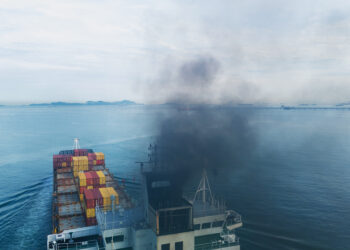
| 30% Energy Chokehold | Approximately 25–30% of global oil and 20% of LNG pass through the Strait of Hormuz, now the primary transmission channel for global inflation.IMF |
| 1.9% GDP Revenue Floor | Despite resource production nearly doubling in the last decade, Papua New Guinea’s government revenue share remains stagnant at less than 2% of GDP.The World Bank |
| 97% Plan Completion | ASEAN and China confirmed the successful wrap-up of their 2021–2025 Plan of Action, transitioning immediately to the 2026–2030 framework.ASEAN |
Lead Analysis 1: The “Asymmetric Shock”: Mapping the Hormuz Transmission
The IMF’s latest diagnosis of the Middle East conflict confirms that we are facing a “global yet asymmetric” disruption that bypasses traditional policy buffers.
The Income Tax on Importers The de facto closure of the Strait of Hormuz is acting as a “large, sudden tax on income” for energy-importing economies. While oil exporters with ample buffers (like the GCC) see a terms-of-trade windfall, large manufacturing hubs in Asia and Europe are bearing the brunt of inflated input costs. This isn’t just about fuel; it is a systemic threat to the operating systems of energy-intensive industries, reviving the specter of the 2021–22 gas crisis in Europe.
Unanchoring Inflation The most dangerous channel is the risk of “unanchored” inflation expectations. If businesses and households believe higher prices are permanent, they build them into wages, making the shock harder to contain without a sharp economic slowdown. For many countries that had only just reached their inflation targets, this conflict represents a “cost-of-living squeeze” that threatens social stability.
Takeaway: Regional stability is the ultimate “profitable asset.” For global markets, the “Hormuz Risk” is now a permanent line item. As the conflict lingers, higher risk premia and uncertainty will continue to deter the institutional capital necessary for long-term recovery and growth.
Lead Analysis 2: ADB’s 3RDO: Institutional Agility as an Asset
The launch of the Rapid Resource Reprogramming and Deployment Option (3RDO) marks a fundamental “software update” to the multilateral lending model.
Coding for Speed; Historically, MDB financing has been hampered by a “coordination tax”, the weeks or months required to approve new loans during an emergency. The 3RDO bypasses this by using Pre-arranged Triggers. By determining eligible expenditures and implementation frameworks before a disaster occurs, the ADB can now activate funds within 24 hours of a government request.
Portfolio Liquidity as a Weapon; The mechanism allows Developing Member Countries (DMCs) to pivot up to 10% of their undisbursed sovereign portfolio (and up to 25% for Small Island Developing States) toward immediate relief. This is Financial De-risking at high velocity; it treats existing project pipelines as a liquid reserve that can be “reprogrammed” to stabilize critical public functions when geopolitical shocks escalate with sudden intensity.
Takeaway: Agility is now a metric of sovereign creditworthiness. By shifting from “project lending” to “contingent deployment,” the ADB is incentivizing a new standard of disaster governance. For regional planners, the 3RDO acts as a structural hedge, ensuring the “first days” of a shock do not lead to a total collapse of the domestic operating system.
Brief 1: ASEAN-China CSP: Scaling the “Regional OS”
The 27th ASEAN-China Joint Cooperation Committee (ACJCC) meeting in Jakarta confirmed that the Comprehensive Strategic Partnership (CSP) has moved into its next operational phase (2026–2030).
The focus has shifted from diplomatic sentiment to the technical “plumbing” of integration. Central to this is ACFTA 3.0 and the RCEP agreement, which serve as the regulatory framework for enhancing supply chain resilience. By prioritizing AI, digitalization, and energy security, both sides are treating “Technical Maturity” as the primary tool to de-risk their shared neighborhood.
Takeaway: 2026 is the year of “Standardized Integration.” As ASEAN and China align their standards on AI and digital trade, they are creating a massive, standardized market that filters out non-compatible global competitors.
Brief 2: Science-Based Standards: The AIIB-IAEA Pivot
In Beijing, the AIIB and IAEA (International Atomic Energy Agency) signed a Letter of Intent to expand cooperation into core “Infrastructure for Tomorrow” silos: energy planning, agriculture, and water management.
This marks a strategic transition from the “One Health” approach to using nuclear science as a tool for national capacity building. By integrating IAEA’s technical expertise into AIIB’s $100 billion capitalization, the bank is effectively de-risking the “technical maturity” of national energy grids.
Takeaway: Science is the new “Standard Weapon.” Strategic partnerships with science-based agencies provide the “scientific software” member states need to manage complex, sustainable infrastructure at scale.
Brief 3: Papua New Guinea: The Human Capital “Productivity Ceiling”
A new World Bank Public Finance Review warns that Papua New Guinea’s (PNG) goal of a K200 billion economy by 2030 is mathematically impossible without a radical pivot toward Human Capital.
The “resource leakage” is acute: resource revenue averaged only 1.9% of GDP even as production doubled. This has created a “hollow asset” where a child born today will reach only 42% of their potential productivity. The Bank prescribes a 4.5% GDP increase in annual spending on health and education to break the cycle.
Takeaway: Resource wealth is no longer enough. Without immediate investment in the “soft infrastructure” of skills and health, PNG risks a structural stagnation that raw commodity exports cannot fix.
Brief 4: NDB 50: The Shanghai-Moscow Corridor
The New Development Bank (NDB) convened its 50th Board of Directors Meeting in Shanghai, shifting its focus toward the next generation of institutional growth.
The Board approved the 2026 Treasury Investment Business Plan and provided guidance on membership expansion and the development of the NDB’s General Strategy for 2027-2031. These strategic pillars are essential for maintaining the Bank’s AAA rating while navigating a fragmented global financial architecture. Preparations are now underway for the 11th Annual Meeting to be held in Moscow this May.
Takeaway: The BRICS-led plumbing is being retrofitted for 2027. The NDB is prioritizing institutional “readiness” and membership growth as a hedge against global financial volatility.
Thanks for reading Devonomics! Send story leads or feedback to sianakazi@regionalintegration.org and share it with a colleague who follows development finance in Asia.
To receive our newsletter updates directly, subscribe on Substack.

Siana Kazi is a Development Finance Fellow at the Centre for Regional Integration and curates Devonomics, an Asia-focused policy brief. Her focus is on South–South cooperation, EU-Asia connectivity, and the implications of trade, industrial, and green-transition policies for regional integration.