

Welcome to Devonomics, a CRI newsletter. Each week we round up the most relevant news in Asia’s development finance and add a short take on what they mean for projects, budgets, and people on the ground. We will also include the latest from CRI, including new analysis and event highlights.
The energy transition is moving from “ideology” to “engineering.” Whether it is ASEAN funding the technical blueprints for cross-border grids or the ADB partnering with the International Atomic Energy Agency (IAEA) to set nuclear safety standards, the focus this week has shifted to the practical plumbing required to keep the lights on while decarbonizing.
What Changed This Week
- Regional Integration: MCDF and AIIB approved $315,000 in grants to fund pre-feasibility studies for the ASEAN Power Grid, focusing on interconnectors in mainland and maritime Southeast Asia. MCDF
- Multilateral Policy & Governance: The ADB has officially updated its energy policy to allow financing for nuclear power, methane management, and carbon capture, utilization, and storage (CCUS) , and immediately signed a partnership with the IAEA to oversee safety standards and collaborate on marine plastic solutions. ADB
- Green Logistics: The ADB approved a $106 million loan to modernize inland river ports in Anhui Province, China, replacing diesel ships with clean-energy vessels to support the region’s booming EV industry. ADB
Lead Analysis | ASEAN Power Grid: The “Boring” Work That Unlocks Billions
The ASEAN Power Grid (APG) has long been a massive political ambition with a staggering price tag, requiring billions to fully integrate the region’s electricity markets. However, despite the high-level handshakes, the network remains fragmented for a simple, technical reason: you cannot trade electricity if the grids on either side of the border don’t speak the same language. Without standardized interconnectors, the region’s energy surplus remains trapped in local pockets rather than flowing where it is needed most.
To bridge this gap, the Multilateral Cooperation Center for Development Finance (MCDF), in partnership with the AIIB, approved concept development support this week. While the $315,000 grant amount may seem small compared to the billions needed, its strategic value is immense. It funds the “unglamorous” but essential work of pre-feasibility studies, regulatory assessments, and data collection for interconnectors in mainland Southeast Asia (Cambodia, Lao PDR, Viet Nam, Thailand, Malaysia, Singapore) and the maritime region (Brunei, Indonesia, Philippines).
Takeaway: This move effectively de-risks the sector for private capital. Investors cannot price the risk of a project that exists only on paper; they need detailed engineering studies to commit funds. By funding this concept phase, the development banks are creating the “instruction manual” that allows commercial investors to eventually step in. Economically, this is the precursor to a unified regional energy market. Once these connections are built, surplus power from hydro-rich countries can power industrial hubs in energy-hungry nations, lowering energy costs for factories and making the entire ASEAN block a more competitive destination for manufacturing investment.
Brief 1 | ADB’s Nuclear Pivot: The Checkbook and the Rulebook
In a coordinated “one-two punch” this week, ADB overhauled its approach to energy security. First, it updated its energy policy to formally allow financing for nuclear power projects, citing the urgent need for “reliable alternatives to baseload electricity.” Just one day later, ADB President Masato Kanda signed a Memorandum of Understanding with IAEA Director General Rafael Mariano Grossi, effectively outsourcing the safety governance of these potential projects to the UN’s nuclear watchdog.
This dual move addresses the two biggest barriers to nuclear adoption in Asia: lack of capital and lack of trust. By opening its balance sheet to nuclear, the ADB acknowledges that renewables alone cannot yet power the heavy industrialization (steel, cement) that developing Asia needs. Simultaneously, by locking in IAEA safety standards as a condition for loans, the bank creates a “gold standard” of regulation.
Takeaway: Safety is now a profitable asset. For investors, the fear of weak regulatory oversight has historically made Asian nuclear projects “uninvestable.” This partnership removes that risk premium. By creating a predictable, high-standard regulatory environment, the ADB is effectively lowering the cost of capital for these massive infrastructure projects, allowing countries to secure the stable, 24/7 power they need to industrialize without blowing their carbon budgets.
Brief 2 | Anhui Green Ports: Decarbonizing the Supply Chain
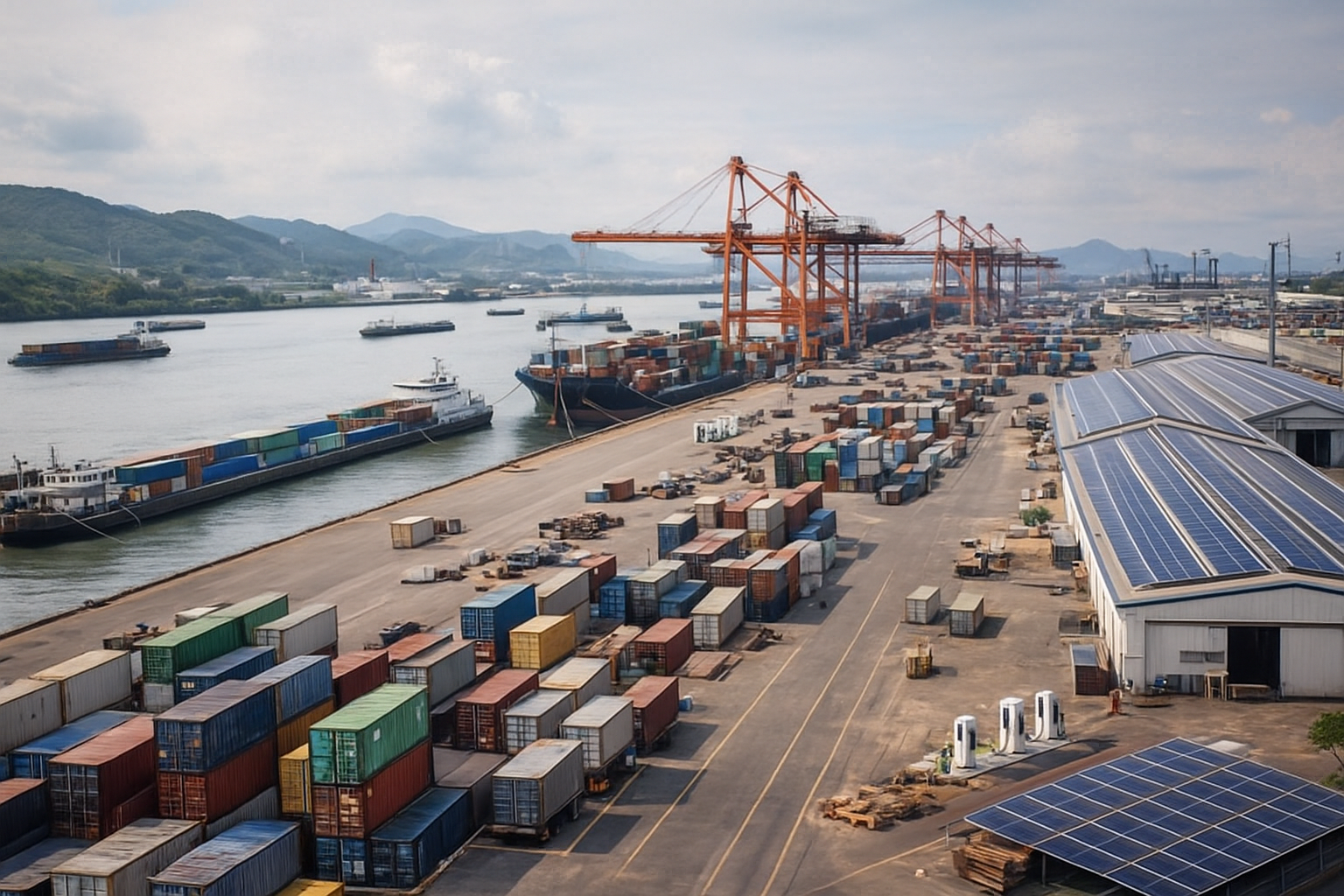
ADB approved a $106 million loan to modernize inland river ports in Anhui Province, China. Anhui is a critical hub for the electric vehicle (EV) industry, but its logistics network has been hampered by outdated diesel vessels and vulnerability to flooding. The project targets the “hardware” of transport: building smart port operation systems, strengthening flood defenses, and physically replacing diesel fleets with clean-fuel container vessels to pilot green shipping routes.
Takeaway: Green logistics is becoming a competitive necessity, not just an environmental goal. As global markets (especially the EU) tighten carbon border taxes, the carbon footprint of transporting a product becomes just as important as the product itself. By decarbonizing the inland waterways that serve Anhui’s industrial base, this project ensures that the region’s exports, specifically EVs, remain competitive, while simultaneously lowering logistics costs for local manufacturers.
Thanks for reading Devonomics! Send story leads or feedback to sianakazi@regionalintegration.org and share it with a colleague who follows development finance in Asia.
To receive our newsletter updates directly, subscribe on Substack.

Siana Kazi is a Development Finance Fellow at the Centre for Regional Integration and curates Devonomics, an Asia-focused policy brief. Her focus is on South–South cooperation, EU-Asia connectivity, and the implications of trade, industrial, and green-transition policies for regional integration.