

Welcome to Devonomics, a CRI newsletter. Each week we round up the most relevant news in Asia’s development finance and add a short take on what they mean for projects, budgets, and people on the ground. We will also include the latest from CRI, including new analysis and event highlights.
The 2026 World Economic Forum (WEF) in Davos exposed a “once-in-a-century” rupture in the global order, where the bedrock of transatlantic trust has fundamentally fractured. While middle powers like Canada and the EU are pivoting toward “Strategic Autonomy” and issue-based coalitions, the Asian Development Bank (ADB) is attempting to bridge the resulting liquidity gap by industrializing the profitability of emerging markets. In this fragmented landscape, the ultimate competitive advantage belongs to “Regulatory First-Movers” who can build reliable governance guardrails amidst the twin pressures of geopolitical noise and the AI tsunami.
What Changed This Week
- The Greenland Framework: In a major de-escalation, President Trump and NATO Secretary-General Mark Rutte announced a deal to enhance Arctic security, effectively ending tariff threats related to the U.S. bid for Greenland. World Economic Forum
- The “Mother of All Deals”: European Commission President Ursula von der Leyen confirmed that the EU and India are on the “cusp” of a historic free trade agreement that would create a market of 2 billion people and account for nearly a quarter of global GDP. World Economic Forum
- Middle Power Defiance: Canadian PM Mark Carney called for a new era of “multi-alignment,” urging nations to build issue-specific coalitions rather than waiting for a return to the old multilateral order. World Economic Forum
- Private Sector Catalyst: On the sidelines of Davos, the ADB launched a High-Level Private Sector Advisory Group to drive institutional capital into Asia’s emerging markets. ADB
Lead Analysis | The Great Rupture: Middle Powers vs. The Global Breakdown
The overarching sentiment at the World Economic Forum this year was a stark recognition that the US-Europe alliance, the foundation of the post-WWII economic order, has suffered a “consequential rupture”. Harvard Professor Gita Gopinath warned that this is a permanent breakdown of trust, forcing Europe to prioritize “Strategic Autonomy” to rely on its own internal security and economy.
This vacuum of traditional leadership has triggered a period of “Middle Power Defiance”. Mark Carney argued that we are in a period of “variable geometry,” where the old order will not return. His viral takeaway summarized the existential stakes: “The middle powers must act together because if we’re not at the table, we’re on the menu”. For Asia, this means moving toward “Coalitional Governance,” where development finance increasingly follows issue-based alliances rather than broad multilateral mandates.
Takeaway: We are moving from “naive multilateralism” to a “bartering and babbling souk” of multi-alignment. The competitive advantage no longer lies with those who have the most data, but with those who build “Regulatory First-Movers”, jurisdictions that offer legal and technical certainty in a fragmented world.
Brief 1 | Davos by the Numbers: Big Ambitions and Brutal Reckonings
The final day of Davos saw a flurry of data points that grounded the geopolitical noise in economic reality.
- 25%: The share of global GDP represented by the upcoming EU-India trade deal.
- $80.1 Billion: The projected gross output of the 2026 FIFA World Cup, highlighting how global sports are now being used as a $2.3 trillion engine for regional integration.
- 2.1 Billion: The number of people still lacking access to clean water, a solvable problem often crowded out by high-tech discourse.
- 150: The number of translators the IMF has cut from its payroll (dropping from 200 to 50), illustrating the “AI tsunami” that Georgieva warns will impact 40% of global jobs.
Takeaway: The 2026 “Davos Math” suggests a pivot toward pragmatic scale. Whether it is consolidating a quarter of global GDP or using global events as economic engines, the focus is on creating massive, resilient structures that can outpace regional shocks.
Brief 2 | ADB’s New “High-Level” Catalyst: Bridging the Alignment Gap
On the sidelines of the World Economic Forum, the ADB launched its most significant private-sector outreach to date: the High-Level Private Sector Advisory Group. Featuring CEOs from Franklin Templeton, Tata Sons, and Temasek, the group is tasked with moving the ADB from a traditional “financier” to a “comprehensive partner”.
The group identified risk pricing and investable pipelines as the primary bottlenecks stalling progress. By housing public and private sector operations under a single “One ADB” roof, the bank intends to quadruple its private financing to $13 billion annually by 2030.
Takeaway: The ADB is positioning itself as the ultimate de-risking agent. In an era where 40% of their operations will soon support private sector development, the bank is signaling that the era of “artisanal” project funding is over; the future lies in “infrastructure-grade” investment vehicles designed for global liquidity.
What to Watch Next Week
Asian Financial Forum (AFF) 2026, Hong Kong (Jan 26–27): Theme “Co-creating New Horizons Amid an Evolving Landscape”
Thanks for reading Devonomics! Send story leads or feedback to sianakazi@regionalintegration.org and share it with a colleague who follows development finance in Asia.
To receive our newsletter updates directly, subscribe on Substack.

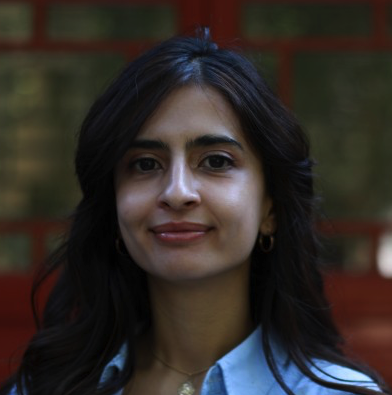
Siana Kazi is a Development Finance Fellow at the Centre for Regional Integration and curates Devonomics, an Asia-focused policy brief. Her focus is on South–South cooperation, EU-Asia connectivity, and the implications of trade, industrial, and green-transition policies for regional integration.