
Welcome to Devonomics, a CRI newsletter. Each week we round up the most relevant news in Asia’s development finance and add a short take on what they mean for projects, budgets, and people on the ground. We will also include the latest from CRI, including new analysis and event highlights.
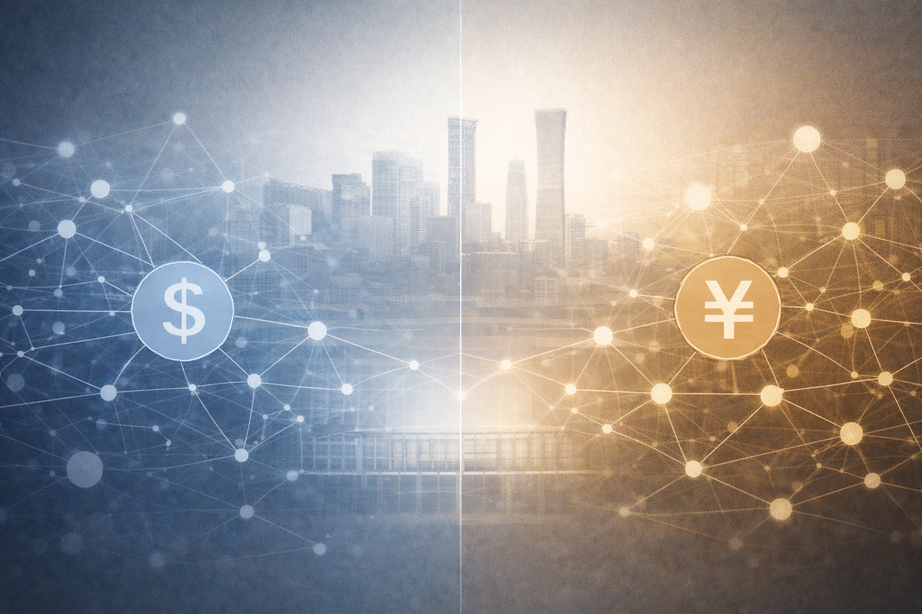
Beijing hosted a collision of economic worldviews this week. While the IMF urged China to pivot internal capital from industrial subsidies to social safety nets, the New Development Bank (NDB) countered with a global call to abandon the dollar-based order entirely, signaling a split between domestic repair and global rewiring.
What Changed This Week
- Growth Forecast: The IMF raised China’s GDP growth projection to 5.0% for 2025, citing recent stimulus and “lower-than-expected” tariff impacts. IMF
- Multilateral Pivot: At the “1+10” Dialogue, NDB President Dilma Rousseff highlighted that the Global South will control nearly two-thirds of global GDP by 2030, calling for a “rebalancing” of obsolete institutions. NDB
- Regional Upgrade: The Asian Development Bank raised developing Asia’s growth forecast to 5.1%, driven by a surge in semiconductor exports and reduced trade uncertainty. ADB
- Trade Barriers: A new World Bank report reveals that non-tariff measures (standards) now affect 90% of global trade, acting as invisible walls for developing nations. World Bank
Lead Analysis | The “1+10” Divergence: Internal Reform vs. Global Rewiring
The “1+10” Dialogue in Beijing offered a rare split-screen moment for the global economy. The IMF focused on fixing China’s internal engine, while the NDB focused on rewiring the external road.
The IMF’s Article IV assessment offered a conditional upgrade. While raising China’s 2025 growth forecast to 5.0%, the Fund warned that this resilience relies too heavily on exports and a depreciating exchange rate. Their prescription is a “forceful policy package” to transition to a consumption-led model. Structurally, this requires reallocating capital from “inefficient investment and unwarranted industrial policy support” toward a robust social safety net and cleaning up local government debt.
NDB President Dilma Rousseff, however, shifted the focus from domestic debt to global sovereignty. Speaking at the same forum, she argued that “institutions that reflect the realities of eight decades ago” are unfit for a world where the Global South will soon hold the majority of GDP. Her solution is not conditionality, but the aggressive use of local currency financing to insulate emerging markets from external shocks.
Takeaway: Two “operating systems” are competing for influence. The IMF signals that China’s stability depends on abandoning its industrial-heavy growth model; the NDB signals that global stability depends on abandoning the dollar-heavy financial model. Investors should expect Beijing to pursue both: adopting the NDB’s strategy abroad while selectively applying the IMF’s “consumption” advice at home.
Brief 1 | The Tech Shield: Semiconductor Exports Drive Regional Upgrade
The Asian Development Bank (ADB) has revised its 2025 growth forecast for developing Asia up to 5.1%, signaling that the region is decoupling from political noise. The primary engine is not commodities, but a structural surge in high-tech exports, particularly semiconductors.
Data shows that “reduced trade uncertainty” following key agreements with the U.S. has stabilized financial conditions. This clarity allowed India’s consumption surge (7.2%) and Southeast Asia’s manufacturing resilience (4.5%) to offset headwinds. However, the ADB warns that this momentum remains fragile, heavily dependent on China’s property market stabilizing.
Takeaway: The real trade story is in the chips, not the tariffs. While headlines focus on fragmentation, the flow of high-value tech is deepening regional integration. Investors should look past macro noise and focus on markets deeply integrated into the semiconductor supply chain, specifically in Southeast Asia, which are acting as the region’s growth shield.
Brief 2 | The Invisible Weapon: Standards as the New Trade War
The World Bank’s World Development Report 2025 reveals a silent shift: international standards have mutated from technical guidelines into geopolitical weapons. Non-tariff measures, from pesticide specs to 5G protocols, now affect 90% of global trade, up from 15% in the late 1990s.
This creates a two-tier economy where wealthy nations author rules that exclude developing countries. To counter this, the Bank proposes an “Adapt-Align-Author” framework, urging emerging markets to stop blindly copying stringent rules and instead strategically adapt standards to build local capacity before aligning with global norms.
Takeaway: Standards are “foundational economic infrastructure.” For investors, regulatory alignment is a primary due diligence filter. Companies in jurisdictions that are merely “rule-takers” face systemic export risks; those actively strategizing to “align and author” are building a defensible competitive moat.
Thanks for reading Devonomics! Send story leads or feedback to sianakazi@regionalintegration.org and share it with a colleague who follows development finance in Asia.
To receive our newsletter updates directly, subscribe on Substack.

Siana Kazi is a Development Finance Fellow at the Centre for Regional Integration and curates Devonomics, an Asia-focused policy brief. Her focus is on South–South cooperation, EU-Asia connectivity, and the implications of trade, industrial, and green-transition policies for regional integration.