

Welcome to Devonomics, a CRI newsletter. Each week we round up the most relevant news in Asia’s development finance and add a short take on what they mean for projects, budgets, and people on the ground. We will also include the latest from CRI, including new analysis and event highlights.
China is driving a dual narrative this week: industrial dominance versus fiscal restraint. While its EV ecosystem has achieved such structural efficiency that it can effectively shrug off European tariffs, Beijing is simultaneously tightening its belt abroad, declining to fill the funding vacuum left by the U.S. in Southeast Asia. This signals a strategic pivot: China is moving away from broad soft-power aid and toward targeted, profitable supply chains, from high-tech cars to circular bioeconomies, that serve its own industrial security.
What Changed This Week
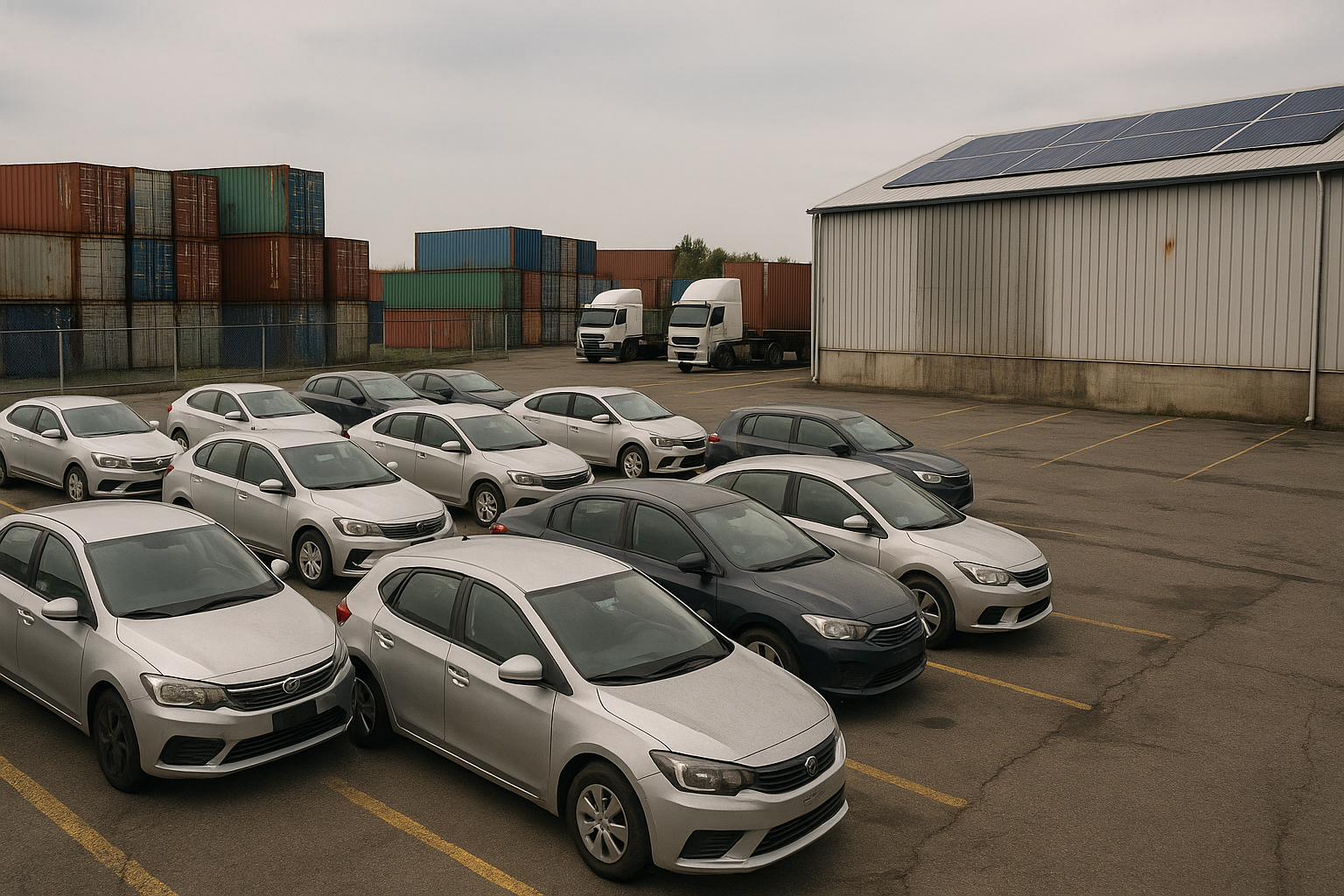
- Trade Policy: The European Commission imposed countervailing duties averaging 20.8% on Chinese EV imports for the next five years, attempting to level a playing field where Chinese manufacturers now hold a dominant 40.9% share of their domestic market. East Asia Forum
- Circular Economy: The Asian Development Bank signed a $50 million green loan with Luli Wood (PRC) to build a “waste-to-energy” manufacturing hub, reducing reliance on imported timber and cutting 200,000 tons of CO2 annually. ADB
- Development Finance: New data reveals China is not filling the projected $2 billion funding gap left by USAID’s exit from Southeast Asia, as Beijing’s infrastructure-heavy model fails to replace US-led social programs. Devex
Lead Analysis | The Tariff Trap: Why 30% Isn’t Enough
The European Union’s decision to impose duties averaging 20.8% (plus the existing 10%) on Chinese EVs is a political signal, but economically, it may be a speed bump rather than a barricade. While the Draghi report correctly identifies that Chinese subsidies are double those of the EU relative to GDP, attributing China’s dominance solely to state handouts misses the bigger picture.
China’s advantage is now structural. Early industrial planning, massive domestic competition, and a ruthless focus on R&D have created a “full chain” efficiency that Europe lacks. Estimates suggest that duties would need to be as high as 40–50% to make Chinese EVs truly unattractive in the European market, and even higher to lock out vertically integrated giants like BYD.
Furthermore, the “subsidy” argument is nuanced. While the OECD estimates Chinese industrial support at roughly 4.5% of revenue (mostly via below-market lending), the sheer scale of the domestic market, where EVs hit nearly 41% of sales in 2024, has driven costs down through competition, not just government checks.
The “Minimum Price” Compromise: With tariffs likely insufficient, diplomatic channels are exploring a “minimum import price” mechanism to avoid a prolonged trade war. China has filed an application with the WTO and is pushing for a price floor that would replace the extra tariffs. However, this is technically difficult. Unlike commodities (like steel), EVs are highly sophisticated products with vast differences in configuration. A single minimum price is unenforceable and risks cross-compensation. If a compromise is to be reached, it may require a hybrid approach: applying minimum price agreements to major, transparent manufacturers while keeping punitive duties on others.
Takeaway: The current tariff levels are likely priced in by Chinese manufacturers. Investors should expect Chinese brands to absorb these costs or accelerate their strategy of building factories inside the EU to bypass duties entirely. The real challenge for the EU isn’t stopping imports, but forcing technology transfers as Chinese firms localize.
Brief 1 | Circular Bioeconomy: ADB Backs Luli Wood’s “Waste-to-Value” Model
The Asian Development Bank (ADB) has signed a $50 million (CNY 353.63 million) green loan with Shouguang Luli Wood Inc. to finance a circular manufacturing hub in Jiangxi Province (PRC). The deal funds the construction of an oriented strand board (OSB) factory and a captive biomass power plant, designed to operate as a closed-loop system.
This project directly addresses a structural vulnerability in the PRC’s supply chain: the country currently relies on imports for over half its wood demand, with only 1% of domestic forests certified as sustainably managed. Unlike traditional plywood, which drives demand for large, old-growth timber, Luli Wood’s OSB production utilizes wood waste, small branches, and fast-growing bamboo (about 10% of inputs) sourced from smallholder farmers.
Crucially, the facility solves its own energy needs. Waste generated during the board production process is fed into the on-site biomass plant, which in turn generates the electricity and steam required to run the factory.
Takeaway: This is a textbook example of “industrial symbiosis” becoming a profitable asset class. By integrating a captive biomass plant, the project doesn’t just reduce emissions (200,000 tons annually); it effectively hedges the factory against external energy price volatility. For investors, the value lies in the supply chain resilience: moving from expensive, imported old-growth timber to low-cost, locally sourced agricultural waste turns a sustainability target into a competitive margin advantage.
Brief 2 | The Myth of Replacement: China Leaves the USAID Vacuum Open
One year after the abrupt dismantling of the U.S. Agency for International Development (USAID), the widely predicted geopolitical shift, that Beijing would rush to fill the soft-power vacuum in Asia, has not materialized. Despite expectations that China would leverage the U.S. exit to expand its influence, experts report that there is currently “no systemic replacement” of U.S. programs by Chinese counterparts.
The data reveals a structural mismatch rather than a seamless handover. While USAID injected roughly $9 billion into the region (2024) for social sectors like health, education, and human rights, China’s development finance remains heavily skewed toward hard infrastructure and commercial-rate loans. With a total foreign aid budget of just $3.5 billion, a fraction of USAID’s former global portfolio, Beijing lacks the fiscal capacity to absorb the U.S. role, especially amidst its own economic slowdown.
Consequently, Southeast Asia faces a projected $2 billion funding gap. Apart from emergency relief in Myanmar ($137 million), China has shown little interest in adopting the “small and beautiful” livelihood programs that characterized U.S. engagement, effectively leaving a development divide across the region.
Takeaway: The “Zero-Sum” theory of aid, that a U.S. exit equals a Chinese entry, has been disproven. Instead of a geopolitical pivot, the region is facing a pure capital liquidity crisis. For investors and regional planners, this “development divide” signals rising social risks (in health and education outcomes) that neither the private sector nor Beijing’s infrastructure-heavy model is currently equipped to address.
Thanks for reading Devonomics! Send story leads or feedback to sianakazi@regionalintegration.org and share it with a colleague who follows development finance in Asia.
To receive our newsletter updates directly, subscribe on Substack.

Siana Kazi is a Development Finance Fellow at the Centre for Regional Integration and curates Devonomics, an Asia-focused policy brief. Her focus is on South–South cooperation, EU-Asia connectivity, and the implications of trade, industrial, and green-transition policies for regional integration.